

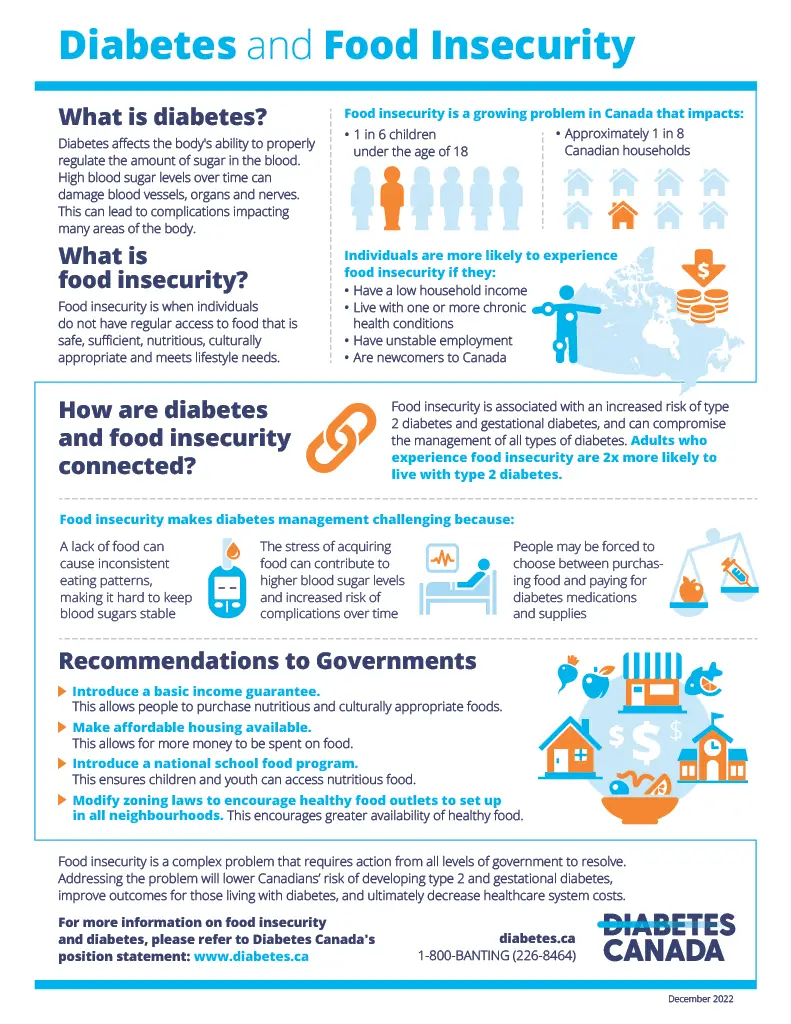
The infographic titled "Diabetes and Food Insecurity" features a series of statistics and illustrations related to food insecurity in Canada. The infographic highlights that 4.5 million Canadians are food insecure, with 1 in 8 households experiencing food insecurity. It also notes that food insecurity is associated with various health issues, including diabetes and the many factors contributing to food insecurity, such as poverty, high food prices, and inadequate social assistance. It also emphasizes the impact of food insecurity on health, education, and social well-being.
Position statement
Food security exists when individuals have access to sufficient, safe, and nutritious food, which meets their dietary needs and food preferences for an active and healthy life (1). Approximately 4 million people, or 1 in 8 Canadian households, are food insecure (1). Population groups that are more susceptible to financial constraints and low-income households, including households with lone parents, children, lower levels of education, Indigenous Peoples, and those living in remote regions are more severely affected by food insecurity (1,2).
Food insecurity is compounded by various factors, which increases peoples risk of developing select chronic diseases (3,4). Food insecurity is associated with an increased risk of developing type 2 diabetes and gestational diabetes and compromising the management of type 1 diabetes and type 2 diabetes through several mechanisms (5).
Read our policy position on food security and diabetes: