

Sponsored content in partnership with Canada Life
It’s normal for blood sugar to rise after eating. If your levels are often higher than your target range, it can feel frustrating. These tips can help you make small changes to reduce blood sugar spikes after meals.
Tip #1: Build a balanced plate
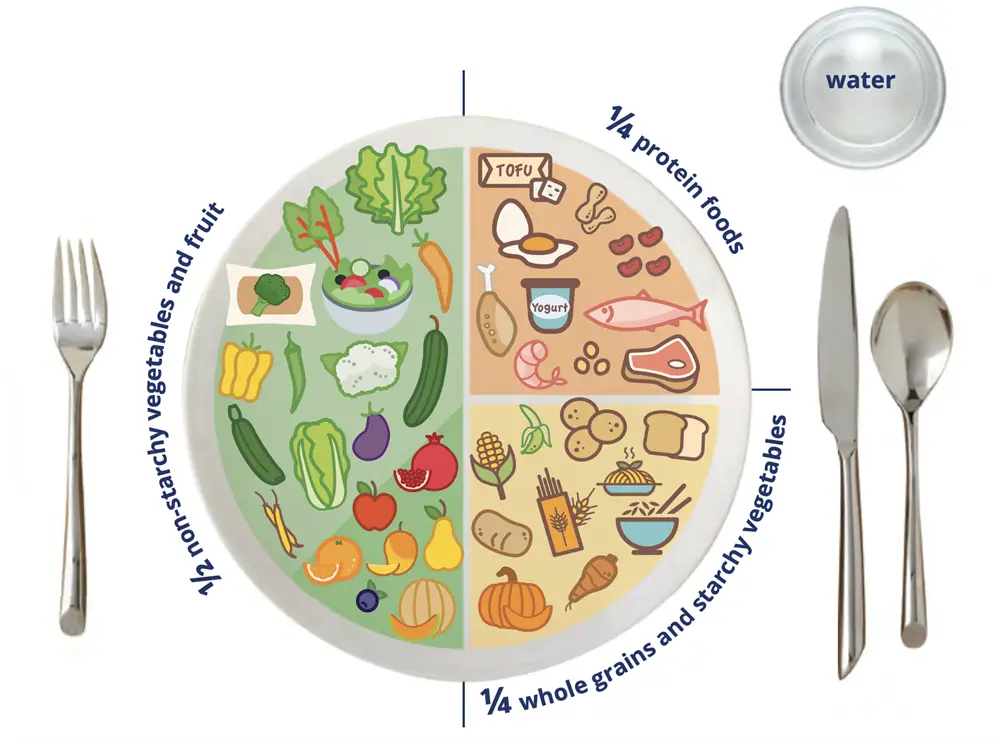
Tip #2: Choose lower glycemic foods
The glycemic index (GI) shows how fast a food raises your blood sugar. Foods with high GI raise blood sugar more quickly than those with low GI. Eating low GI foods more often can help reduce blood sugar spikes. If you eat high GI foods, combining them with a source of protein and/or fibre can help. The protein and fibre slow the release of the carbs in the high GI foods, helping to reduce blood sugar after meals. To learn more about the glycemic index, see the Glycemic Index Food Guide.
Tip #3: Move your body after meals
Light activity, like walking for 10 to 15 minutes after a meal can help lower your blood sugar. Moving your body within 20 to 30 minutes after eating helps your muscles use the carbs from your meal more quickly. Any movement helps – standing and washing dishes, seated leg lifts or light weights or dancing around your living room. Moving more and sitting less is always helpful with blood sugar management.
Tip #4: Add some resistant starch to your meals
Starch is a kind of carbohydrate found in many foods. Starch breaks down into sugar in your body and raises blood sugar. Resistant starch (RS) acts like fibre and does not impact blood sugar. It is found naturally in some foods and can be increased or created in other foods depending on how you cook them.
Resistant starch is naturally high in:
- Legumes (beans, peas, lentils),
- Uncooked oats (such as overnight oats) and millet
Resistant starch can be increased in foods by:
- Cooking and cooling pasta, potatoes, and rice (think fried rice or pasta salad)
- Freezing and thawing grain products (bread, pita) before toasting
- Even reheating food prepared this way before eating maintains the increase in resistant starch
Foods that have resistant starch still have carbohydrates, but if you increase the RS in these foods, the overall carb load is lower and may have less impact on blood sugar.
Tip #5: Watch portion sizes of carbohydrates
Even healthy choices and low GI carbs can raise blood sugar if eaten in large amounts. Be mindful of portion sizes and use tools like the balanced plate which can help keep your portions in check.Tip #6: Choose water as your drink of choice
Sugar sweetened drinks and juice cause blood sugar to rise quickly. When combined with your regular meal, they add fast acting sugar to the carbs you are also eating, making your blood sugar higher after mealtimes no matter what you eat. Choose water, unsweetened drinks or coffee or tea without added sugar with your meals. Unsweetened milk or plant-based beverages are also nutritious choices but do contain carbs.
Tip #7: Take your medication consistently
Follow the instructions for taking your medication and/or insulin. Timing is important to make sure they are most active over your mealtimes to reduce the overall rise in blood sugar after your meals. If your blood sugar is often higher than your targets after meals, talk to your healthcare team.